


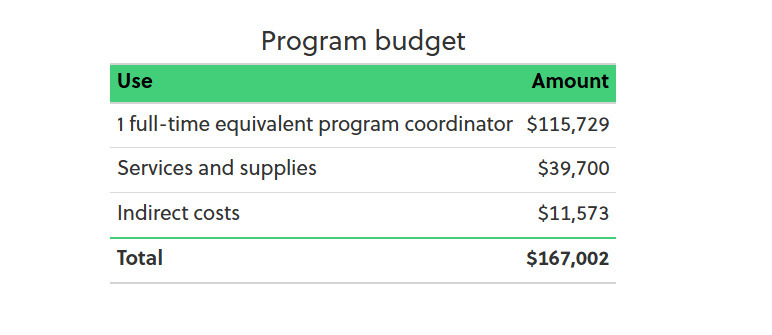
The San Luis Obispo County Board of Advisors approved spending $167,000 of opioid settlement money to address kratom addiction during its meeting on Sept. 1.
The money will fund the salary of an additional program coordinator for the County of San Luis Obispo Public Health Department, who is tasked with reducing addiction to kratom, which is attributed to nine overdose deaths in the past five years. The money will also fund additional services and supplies.
Mustang News found kratom products for sale in San Luis Obispo, and about 1% of Cal Poly students have used kratom each year from 2023 to 2025, according to Campus Health & Wellbeing’s yearly “Healthy Minds Survey”. The number is higher than the national average of 0.38% among college students, according to the Journal of American College Health.
Local and national health officials warn that kratom is dangerous, especially the chemical bond 7-OH. Small amounts of 7-OH can be found in kratom products, and some 7-OH products are falsely advertised as kratom, according to the Food and Drug Administration. Called the “new wave” of the opioid crisis, local health officials hope to educate people on its risk for addiction and overdose.
What is kratom
Kratom is an herbal extract from South Asian evergreen trees that acts as a stimulant, which people use to treat pain, coughing, anxiety, depression and other “self-treat” conditions, according to the Food and Drug Administration.
7-OH is a concentrated opioid compound derived from kratom and is stronger than natural kratom, and some 7-OH forms can be 13 times more potent than morphine, according to Jennifer Miller, the prevention and community health division manager for the County of San Luis Obispo Public Health Department during a Board of Advisors meeting on June 2.
In San Luis Obispo County, drug treatment centers have seen 40% more intakes for kratom and 7-OH withdrawal, according to Miller, and many of those seeking treatment thought that kratom and 7-OH were safe.
“They thought that they were using kratom as an energy supplement, a natural alternative to an energy drink, and then ended up with a dependence,” Miller said.
Miller also reported an increase in 911 calls for overdoses to kratom and 7-OH.
Kratom usage
Despite a relatively small population of kratom-using Cal Poly students, Miller noted that kratom can become dangerous when combined with other drugs or substances.
In her June presentation to the board of advisors, Miller said that in each of the nine kratom overdose deaths, other substances were present in the toxicology report.
Kratom usage is about 5% higher when consuming alcohol and 2% higher when using marijuana, according to the American Journal of American College Health. Additionally, CDC data show that 79% of kratom-related deaths in the United States involved multiple substances.

Stopping kratom sales
As of Sept. 7, kratom-related products were for sale in multiple smoke shops near Cal Poly’s campus. Mustang News visited four smoke shops near campus and bought kratom products from two shops — Wild Side Smoke Shop on Santa Rosa Street and Smoke Arts on Foothill Boulevard.
Mustang News reached out to both Wild Side Smoke Shop and Smoke Arts for comment.
The manager for Wild Side Smoke Shop said his store regularly consults lawyers and meets with law enforcement over what they can and cannot sell in their store.
A representative of Smoke Arts said that they were unsure whether kratom is sold in their store or not.
The California Department of Public Health considers selling kratom or 7-OH products illegal in California by labeling them as “adulterated”.
On Sept. 2, Governor Gavin Newsom’s office announced that 97.75% of stores with Alcoholic Beverage Control licenses were in compliance with these restrictions and were not selling kratom or 7-OH products.
However, Miller said that current laws do not do enough to stop the sale of kratom.
“The retail landscape is very wide, and so that makes it quite difficult to enforce without a local ordinance that explicitly gives authority to a specific county entity,” Miller said.
With the agenda item passed on Sept. 2, the County of San Luis Obispo Public Health Department will have the power to create regulations that give the county authority to enforce the state’s ban on kratom.
“What we would do in an ordinance is give a local enforcement entity, most likely that would be public health, the ability to actually go [into a retailer] and do an inspection and issue a violation,” Miller said.
Local education
Miller said that it is important to be aware of kratom’s dangers, especially as “influencer-driven content” promotes it online.
“Students need to educate themselves about what’s actually in these products,” Miller said.
Campus Health and Wellbeing plans to educate students on the dangers of kratom and the use of Narcan, which can reverse a kratom overdose, according to Diego Abeloos, Campus Health and Wellbeing communications director.
“We will continue to offer Narcan trainings weekly at CH&W, where our AOD team members are available for questions regarding 7-OH and other substances impacting the nation,” Abeloos wrote in an email to Mustang News.