


Cal Poly’s new 18.5 acre solar farm was dedicated Wednesday during a ribbon cutting ceremony that brought together public officials and Cal Poly staff. This facility is the university’s first major project to help the campus reach a net-zero energy status.
“This new Cal Poly solar farm is currently the largest single solar array in the entire [California State University] system,” Director of Energy, Utilities and Sustainability Dennis Elliot said.
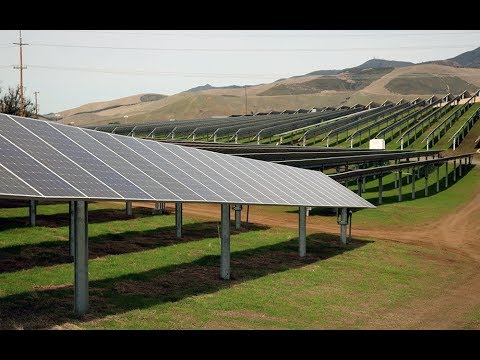
The solar farm is located on the western edge of campus, off Stenner Creek Road. Through this new facility, Cal Poly expects to save millions of dollars and create more Learn by Doing opportunities for students. The farm holds more than 16,000 solar panels with a capacity of 4.5 megawatts.
According to Elliot, the solar farm will generate about 11 million kWh per year. This will provide 25 percent of the university’s electricity needs, saving Cal Poly $17 million in 20 years.
Cal Poly partnered with REC Solar, a commercial solar provider, to design and build the solar farm.
“We’re very excited about this partnership with REC Solar,” President Jeffrey Armstrong said at the ribbon cutting. “It made it that much sweeter that REC Solar was founded by Cal Poly graduates and many of their current employees are Cal Poly graduates.”

REC Solar provides colleges, universities and school districts with solar solutions. They have completed more than 100 solar projects that have generated more than 30 megawatts.
“We applaud Cal Poly’s creativity in leveraging the system to inspire research in sustainability for years to come. REC Solar is privileged to be a part of the university’s sustainability journey,” REC Solar CEO Matt Walz wrote in a press release.
In addition to the environmental and economic benefits, the solar farm has created more academic opportunities for students. Through a solar engineering and microgrid laboratory, students will learn to experiment with solar technology in the Electrical Engineering building, where data from the solar farm will be continuously measured and made available.
“This is a huge step toward our goal of climate neutrality, and we are very excited about using this new facility to support students’ hands-learning,” Elliot wrote in a press release.
The animal science program will also benefit from this new facility by using the site to research vegetation management practices for utility scale solar farms.
“This is a great example of public-private partnerships and being very frugal and saving money that could be better used with students on other projects. It’s exciting,” Armstrong said.