


For many casual gamers, a single laptop suffices for school and video games. A PC might be hidden somewhere on their gift wishlist, but they know it’s an expensive ask.
However, the games their friends play might be unable to run on an outdated laptop or a Mac because of an underpowered graphics card. Some games don’t even have a Mac-compatible version.
“I started on my brother’s old laptop, and it could only run Overwatch at 25 fps,” forest and fire science senior and Overwatch president Rebekah Lee said. “It was not a very workable experience.”
At 25 frames per second (FPS), fast-paced first-person shooter games such as Overwatch are much more difficult. It’s similar to watching a fight scene in The Matrix, but instead of playing on an HD movie screen, it’s a flipbook animation with only 50 pages.
Players experience lag and missed frames, which could be the difference between winning and losing a fight.
Making esports more accessible
However, having a Mac may not be a problem anymore. The Cal Poly Esports Club is working on adding an updated computer lab for their competitive players.
“It’s not an accessible sport,” Lee said. “If the school can’t provide the equipment, you need to spend $1000 on a nice Windows computer that can run games at the level you want them to.”
The computer science department has a game design lab, but the Alienware monitors are outdated, and some aren’t connected to PCs. Most people use the room to study on personal laptops.
In 2021, previous esports advisor Andrew Byrne applied for an award that would give the club six new PCs, and they won. After many shipping delays, the PCs finally arrived and members of the esports club got together to build them.
“It was so amazing getting them to turn on for the first time,” Lee said.
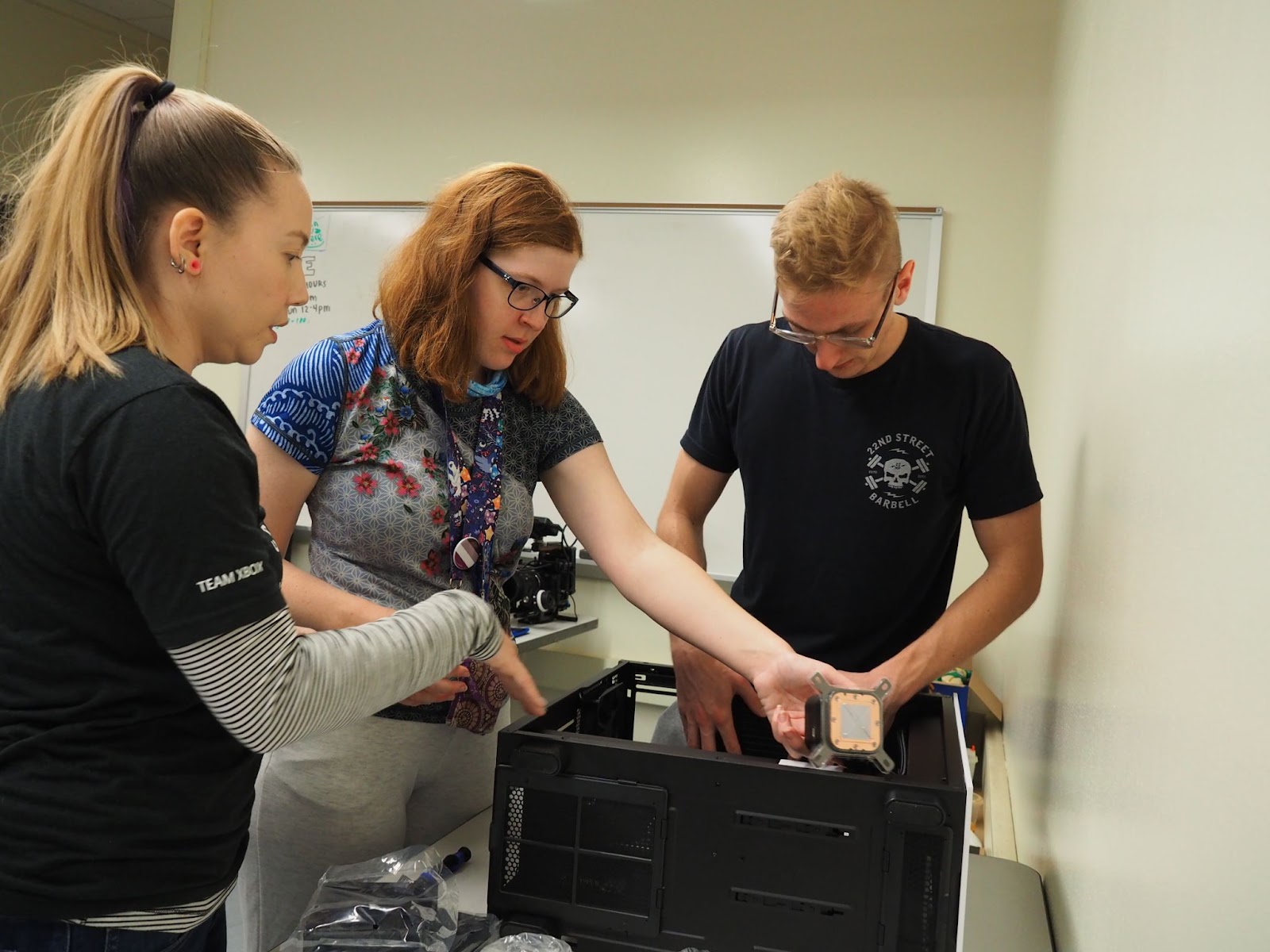
The computers will have a permanent location on campus, but the room number hasn’t been determined yet. Their competitive teams will use it for scrimmages while waiting for a fully-fledged computer lab with 20 or more PCs.
Current president of the esports club and computer science junior Adi Gottumukkala is working with Lee to try and get more equipment.
“There are so many people that are like, ‘Yo, I don’t have a PC to play on, so I can’t play this game,’” Gottumukkala said. “These six PCs would allow people to try out for competitive teams.”
Currently, the competitive teams practice in their own homes and talk on a Discord voice call.
“It’s like playing football and practicing by yourself and then joining together to be a team versus just practicing with your team,” Gottumukkala said. “Being able to be in a room with my team members in a competitive way is way better than doing something online.”
Division II Overwatch player and computer science senior Tyler Brady said that he hasn’t met his teammates in real life yet.
“I’m playing with my teammates but I’m not physically there,” Brady said. “The idea of having an esports lab where we’re all sitting there together seems super cool to me.”
Just like any other team sport, communication is vital in video games. A lack of it could lose you the game.
“While it may seem like people are just shooting guns in a game or playing capture the flag, there’s a lot of strategy with that,” Gottumukkala said. “With better teamwork, you can probably beat any team in the world even if you’re not as good as other people.”
Finding a space on campus
However, there are a few obstacles to making the computer lab a reality. First off, the campus has limited space that many other clubs are fighting for.
Because the esports club is not an officially sponsored program like athletics, the space committee is less likely to give them a permanent location for gaming.
However, Gottumukkala met Aaron J. Fernandes who spoke with him on behalf of ASI Chair of the University Union Advisory Board (UUAB). Fernandes will present the idea to the rest of ASI, as they’re trying to make the recreation center more accessible.
ASI is also working on creating official intramural leagues for esports.
“Gaming on campus and esports is one of the biggest communities on campus even though it doesn’t seem like it,” Gottumukkala said.
Many other UCs and CSUs have PC Cafes, even though Cal Poly was one of the first schools to propose the idea, according to Gottumukkala.
Another problem is finding a company to work with to provide more PCs. Gottumukkala is contacting people in the gaming industry to see if they are willing to support the cause, but responses are slow.
For now, he hopes to unite the gaming community in a tangible place.
“Having something you can rally around, a real place on campus where people can come in and host events, would be a really big first step into making it real,” Gottumukkala said.